


As extreme heat events become more common, researchers are urging local and state policymakers to be proactive in equipping K-12 schools to adapt and protect students and teachers from the physical and cognitive effects of hot weather.
Oregon State University researcher Sabine Huemer, a professor of practice in psychology, was part of the team behind a new report in the Schools, Climate, and Health series for the American Psychological Association that reviewed existing scientific literature about how extreme heat affects well-being and learning in the classroom.
“I believe most people assume that somebody’s taking care of this problem already, that it’s not a real problem,” she said. “Unless you’re the parent of a kid that’s suffering more at school, or at a school that lets kids out early or gets closed for a day due to heat, people are not thinking about this.”
People are also reading…
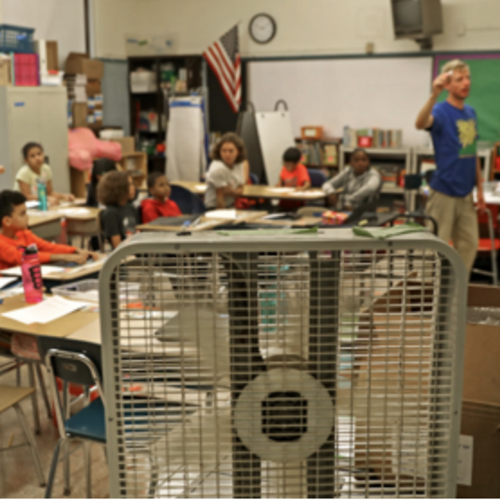
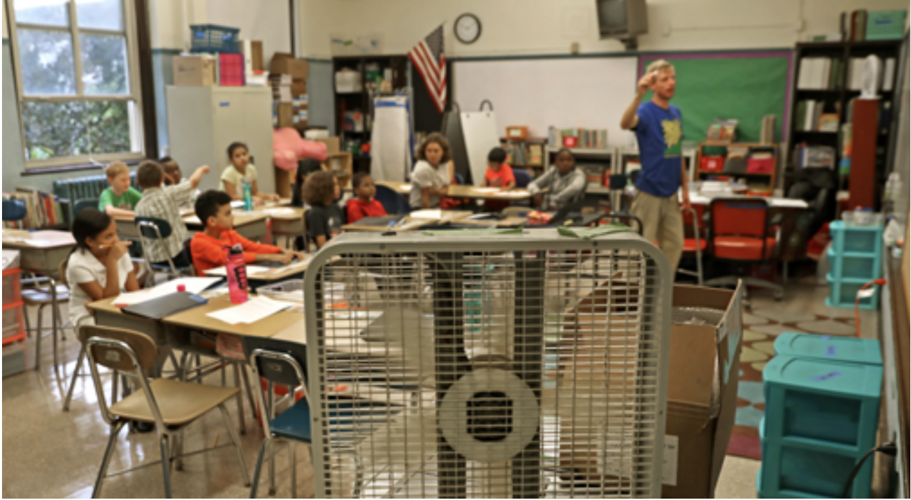
According to the state Department of Education, K-12 school buildings in Oregon are 56 years old on average. In Portland, the state’s largest school district, only 15 of 81 public schools have AC or a full HVAC system capable of cooling.
Some Portland schools had to implement early release in June 2025 and September 2024 due to extreme heat, and North Clackamas schools canceled classes entirely at least one day in September 2024.
“These buildings weren’t designed with extreme weather in mind,” Huemer said. “A lot of kids are sitting in classrooms with elevated temperatures.”
High heat poses a number of challenges for students, including physical symptoms like dehydration, heat cramps, dizziness, nausea and skin conditions like eczema, the report says. Younger children have not fully developed their physiological response to heat so their bodies acclimate more slowly than adults can.
Excessive heat also affects children’s ability to emotionally regulate by straining their cognitive and physiological resources, increasing cortisol and interfering with the systems that help them calm down. All these factors can negatively impact decision-making and attention span, and lead to kids acting out behaviorally, Huemer said.
“They’re really reacting to nervous system overstimulation and being too hot or being dehydrated, and it’s getting misinterpreted as behavioral problems,” she said. “Irritability is usually the first sign of heat illness in younger kids.”
Students and teachers with chronic illnesses or disabilities are disproportionately affected as extreme heat can exacerbate underlying conditions. Socioeconomics play a role too; low-income areas tend to have fewer trees than more affluent areas, so the local schools experience higher temperatures and a lack of shade. Similarly, urban schools in “heat islands” where highly concentrated city buildings retain heat during the day may experience higher temperatures and worse cooling at night than schools in rural areas.
When extreme heat events coincide with wildfires, smoky air may prohibit schools from opening windows to improve ventilation and cooling, compounding the problem.
The report laid out recommendations for addressing these problems at the state and local level, separate from the expensive infrastructure overhaul needed to install or update HVAC systems in every facility. Much of the guidance centers on having procedures in place with clear leadership and standards for responding to heat events and for reducing student and staff exposure to high heat wherever possible.
The researchers also call for schools to be more flexible around learning expectations during heat events, treating high heat days like “snow days for cognition.”
Still, plans alone can only go so far in the face of a 100-degree day, especially when temperatures are predicted to rise consistently in the next several decades without significant reductions in greenhouse gas emissions.
“To really mitigate these risks, to really plan ahead and avoid these disruptive situations, you definitely have to put money into making some architectural adaptations – window shades, more trees, air conditioning, designated cooling spaces where students and teachers can go for breaks,” Huemer said. “You don’t have to retrofit the entire school, but it does require some investment. And we need to plan ahead, now that this is becoming more of a prominent problem.”


