

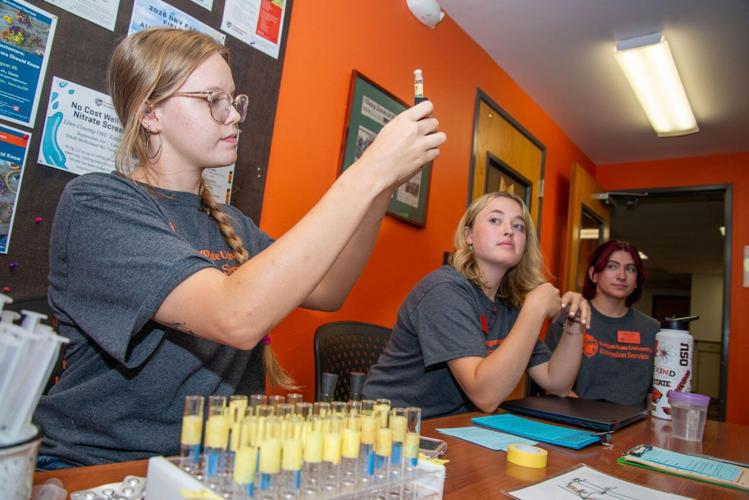
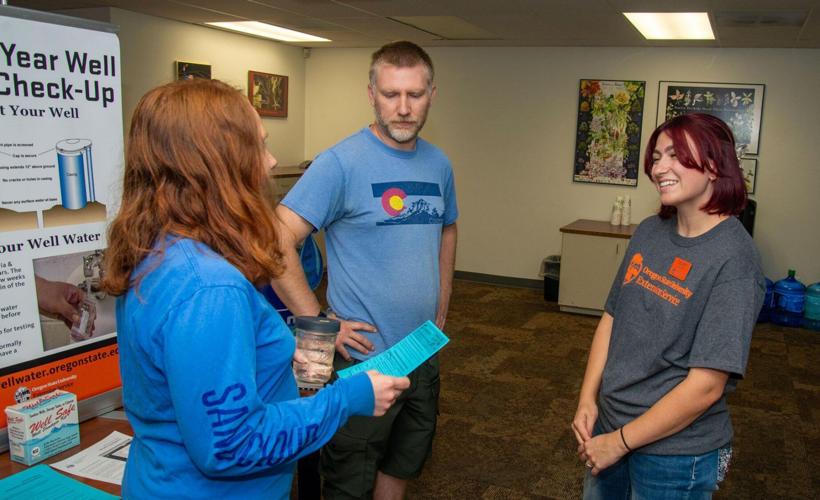
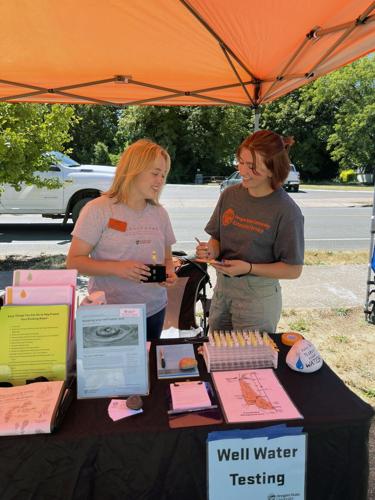

TANGENT, Ore. — At the Oregon State University Extension Service office in Linn County, Nakayda Jacobs held a vial of well water to the light, comparing its color with a nitrate test as residents waited for results from samples they had brought from home.
“I told her I wanted science and I wanted communications, and she was like, ‘You want Extension.’”
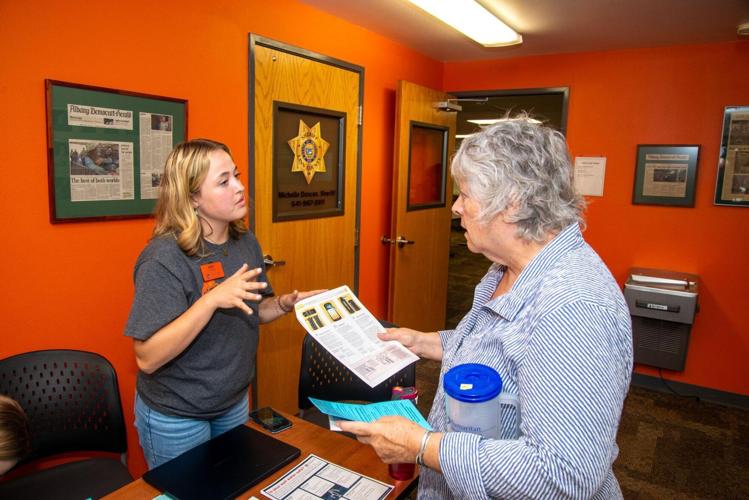
Nearby, fellow interns Abby Thorsen and Colleen Lovdokken talked with well owners about their results, answered questions and shared information about water quality and treatment. It was one of dozens of community events the three students worked during the summer with the OSU Extension Groundwater Protection Program.
For seven years, the program has regularly hosted interns through the OSU Extension Internship Program, often two or more each summer and most of them OSU students. The arrangement is reciprocal: Students gain hands-on experience in education, communication and community outreach while helping a program with a large service area bring groundwater information directly to more Oregonians.
People are also reading…
Chrissy Lucas-Woodruff, assistant professor of practice and Extension domestic groundwater and septic specialist, said interns allow the program to reach communities she could not cover alone while giving students a place to practice skills they will use throughout their careers.
“Physically, I could not do all those outreach events. I could not be in all those communities,” said Lucas-Woodruff, who is in the OSU Department of Biological and Ecological Engineering. “I learn probably just as much or more from them.”
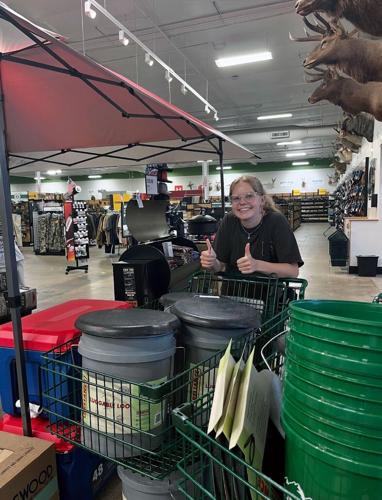
During summer 2026, Thorsen, Jacobs and Lovdokken helped plan nitrate-screening events, promoted them to residents, prepared educational materials and tested well-water samples. They worked at more than 45 events across seven counties and assembled 168 portable toilet kits and 32 water purification kits.
All three planned to continue working with the program beyond the summer.
Seeing Extension from the other side
For Thorsen, joining Extension as an intern meant returning to an organization that had been part of her life since childhood.
Thorsen, a junior studying human development and family science at OSU, joined Extension’s 4-H Youth Development Program when she was 9 and participated for 10 years. In high school, she also served on advisory boards through Extension in Polk County.
“I think I’ve definitely been on the receiving end for most of my life and my involvement with it, so it’s been super cool seeing how things are run,” she said.
That behind-the-scenes work included planning events, traveling to communities and talking with well owners about something that can be deeply personal.
At nitrate screenings, interns sometimes have to tell residents that a sample has an elevated nitrate level and discuss next steps. Thorsen said those conversations require more than knowing the science.
“It can be challenging, but you have to tell people and break the bad news to them,” she said. “It’s your water and it can relate to your health, so I think it’s really important to just kind of be gentle with it and meet them where they’re at.”
She also encountered residents reluctant to share information because they worried Extension might report information about them or their property. The experience taught her that building trust is part of providing useful information.
Putting the pieces together
Jacobs came to the internship from a different direction.
A senior at OSU studying natural resources and agricultural and natural resources communications, Jacobs had worked in laboratories and gained experience with soil and entomology. But she increasingly realized she wanted a career that combined science with people.
A conversation with Troy Hall, associate dean of the OSU Honors College, helped her put a name to that kind of work.
“I told her I wanted science and I wanted communications, and she was like, ‘You want Extension,’” Jacobs said.
At first, groundwater was unfamiliar territory. But adding water to her previous experience in soil and entomology broadened her view of natural resources.
“Having that water component kind of put the whole puzzle together for me,” she said.
By late August, Jacobs had worked at 17 events and conducted hundreds of nitrate screenings. One of her favorite parts was meeting residents and hearing about their relationships with water.
The internship also introduced her to other parts of Extension. At a free farm stand in Sweet Home, she helped distribute locally grown produce to residents, an experience that connected with her interest in food security.
Whether testing well water, distributing emergency preparedness supplies or helping at the farm stand, Jacobs said she learned the importance of meeting communities where they are and linking people with useful resources.
Science with empathy
Lovdokken entered the internship comfortable with scientific research but looking for experience outside a laboratory.
A senior studying biology and Spanish at OSU, she hopes to work in community-based conservation.
“I have a lot of lab and research experience, but I knew that this internship would really get me the community-focused side,” she said.
She learned to organize outreach events and translate technical information for a public audience, but one of her biggest lessons was how to deliver difficult information with empathy.
At one clinic, a resident who had previously received a high nitrate result returned with two samples — one taken before the household’s water passed through a filtration system and one afterward.
Lovdokken tested both. The untreated sample still showed elevated nitrate, while the filtered sample had no detectable nitrate.
The resident had learned about the problem through an earlier Groundwater Protection Program screening, followed treatment recommendations and returned with evidence that the treatment was working.
For Lovdokken, the experience demonstrated how public education can lead to tangible results.
“At nitrate testing clinics, I am not just sharing data,” she wrote in a reflection on her internship. “I’m communicating science that affects people’s health, family, finances and quality of life.”
Extending the program’s reach
The Groundwater Protection Program has expanded from work concentrated in Linn, Benton and Lane counties to communities across Western Oregon and the Oregon Coast. Interns help Lucas-Woodruff cover that larger area while learning how to plan events, communicate with different audiences and turn science into useful information.
Their different academic backgrounds also reinforce a point Lucas-Woodruff emphasizes with students: Water crosses disciplines and affects everyone.
She wants to keep offering those opportunities and expand them when resources allow.
“If I had the funding, I’d have five or six interns,” Lucas-Woodruff said.