

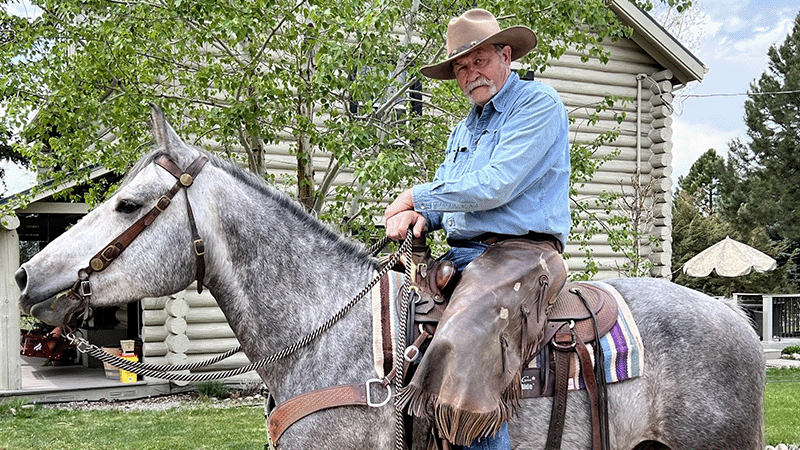
Army veteran Ron Skinner
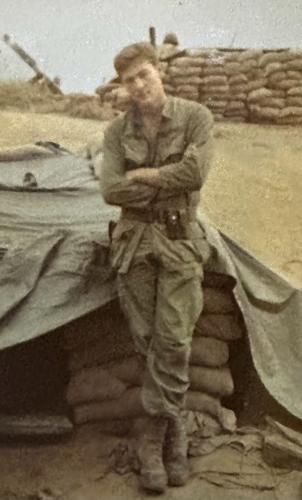
When he enlisted, he was 18 years old and used to northern winters and cool summers. Stepping off the aircraft in Vietnam just a few months later in 1967 felt like stepping into a blast furnace.
“It was really scary,” said Missoula resident Ron Skinner. “At 18, what a young man is interested in is chasing girls, driving fast cars and drinking beer. In a very short period of time, I’m having live bullets shot at me and people are trying to kill me. You wake up and mature instantly. I missed a block of my life. I went immediately to learning how to stay alive in dangerous situations. I had to be on alert, 24/7, 365 days in the jungle.”
Skinner, who had spent time in special improvised explosive device training during boot camp, served as a minesweeper in the 1st Cavalry Division, the Army’s first major airmobile helicopter unit in Vietnam. His job was to not only first identify IEDs and booby traps in the jungled terrain, but to access the potential hazards for nearby soldiers and infrastructure and then disable or destroy the explosives.

Ron Skinner at his Army base in Vietnam
He saw combat and death every day. His unit was also part of the Tet Offensive and the Siege of Khe Sanh. During his year of service as a sergeant (E5), 26 members of his squad were killed.
“When you gather what few belongings they had, which is very little, it does affect you. You keep a calendar in your mind and on your helmet on when you can go home. You check off days, hours sometimes,” he said. “You see a lot of destruction and death and you finally get numb to the point that it’s not shocking anymore. In fact, that’s probably the first step of PTSD. You make your mind become numb because, otherwise, you’d be in an emotional state all the time and if you can’t think straight, that’s the difference between life and death.”
Skinner said since soldiers were sent to Vietnam as replacements and not as part of an entire squad, “you don’t know anybody when you arrive. You make acquaintances, but you learn very fast that it is not friendships. Acquaintances only — because the person alongside you today might be dead tomorrow.”
Besides the intense heat, he said, probably his biggest shock in the country was during his first day there. The 1st Calvary’s landing zone had an Army surgical hospital on-site. That day, an infantry unit had gotten into a firefight and the helicopters were bringing in dead and wounded one right after the other.
“There were so many, they were just stacked on top of one another,” Skinner said. “They didn’t even have time to put them in a body bag. And you look at that and say, ’Do I really want to be here?’ But there was no place to go.”
He was never more excited than when his one year was up.
“We were all on the plane saying get this sucker off the runway now,” he said. “It was deadly quiet on the aircraft until we lifted off and then there was loud cheering.”
Twenty-three hours later after landing in the states, their plane was held up on the tarmac.
An Army officer boarded and told them they would be transported by prison bus to the base. Yes, a prison bus. The roads were lined with protestors brandishing signs with the words “baby killer” on them. The officer told them they had three choices: They could go on leave for 30 days, have a steak dinner on the base, or buy civilian clothes at the PX and head to the airport for home. Under no circumstance were they encouraged to wear their uniforms in public.
“I went and served to defend my country for a year, so that these protestors can call me a baby killer? Man, that was hard,” he said.
By 1980, PTSD had reared its ugly head and Skinner was ready for open space and close proximity to the wilderness. Crowded rooms, heavy traffic and relationships were all too much to navigate. He moved to Missoula, where he met a former Navy Seal who had also served in Vietnam and was now counseling other veterans.
“He was the one who made me aware of what PTSD was,” Skinner said. “I thought I was the only one feeling the way I did.”
In 2003, after running into issues with VA benefits and realizing that other veterans were having the same problems, Skinner founded a nonprofit, the Ravalli County Veterans Service Center. The RCVSC is a one-stop facility that provides veterans and their families assistance with counseling; VA disability claims, health care and burial benefits; guidance on educational benefits; and access to other local resources. He worked there until his retirement and served on the nonprofit’s board until just recently.
Today the 77-year-old raises horses and mules and enjoys hiking in the back country. Crowded spaces still affect him.
After helping thousands of vets through the last two decades, he is constantly running into them and their families when he walks down the street.
“It feels very satisfying to know that we were able to provide assistance to those veterans in need,” Skinner said.
He admits he appreciates when people come up to him and thank him for his service. When they do, and say it in a heartfelt way, it’s almost like the welcome home parade Skinner never received the day he arrived back in the states and was told to hide his uniform.
“When you serve, you are stepping into a situation that no one can teach you about or tell you how you will be affected by it,” Skinner said. “When you raise your right hand and take the oath, you are promising to give everything to the United States, including your life, in defense of your country and democracy. That’s important. I took that oath very seriously. It’s not something you walk away from. And it doesn’t matter what color skin you have or what sex you are. We all bleed red.”
To learn more about the "Stories of Honor" series, please visit states.aarp.org/montana/storiesofhonor. AARP is the sponsor of the Stories of Honor series, which features profiles of veterans across Montana.